

Can I work as a Planner Without being an Engineer?
Introduction
In the construction industry, the role of a Planning Engineer is important for the successful execution of projects. Traditionally, this role has been filled by individuals with an engineering background, as an engineering degree’s technical knowledge and expertise are invaluable in planning and coordinating construction activities.
However, the question arises: Can someone without an engineering degree work as a Planner, especially if they possess equivalent skills? The answer is yes, but it requires a specific set of skills and expertise that can compensate for the lack of an engineering degree.
The Traditional Path: Engineering Degree
A Planning Engineer is typically expected to have a Bachelor of Engineering degree. This educational background ensures that the individual has a strong understanding of the technical aspects of construction, such as the logical sequence of work, the structural integrity of buildings, and the ability to interpret engineering drawings and specifications. These skills are fundamental to creating accurate and effective project plans.
Ready to take your skills to the next level? 🚀 Check out our Special Online Courses! 🚀
Gain valuable insights, boost your career, and learn from industry experts.
However, for those who do not have an engineering degree but are working in the construction field, there is still a pathway to becoming a Planning Engineer, provided they can demonstrate equivalent or superior skills.
Key Skills for Non-Engineers
For non-engineers aspiring to become Planning Engineers, the key to success lies in developing a set of skills that can rival or even surpass those of a traditionally trained engineer. Here are some essential skills that can make a non-engineer competitive in this field:
- Proficiency in Primavera P6: Primavera P6 is the industry-standard software for project planning and scheduling. Mastery of this tool is essential for any Planning Engineer. Non-engineers who can demonstrate advanced proficiency in Primavera, including the ability to create, manage, and optimize project schedules, As our website has plenty of online Courses that make you a professional Planning Engineer
- Understanding of Work Sequences: Familiarity with the logical sequence of construction activities is critical. A non-engineer must have a deep understanding of how different tasks interrelate, the dependencies between activities, and the overall flow of construction work. This knowledge ensures that the project plan is realistic and achievable.
Check our Method of Statement Articles
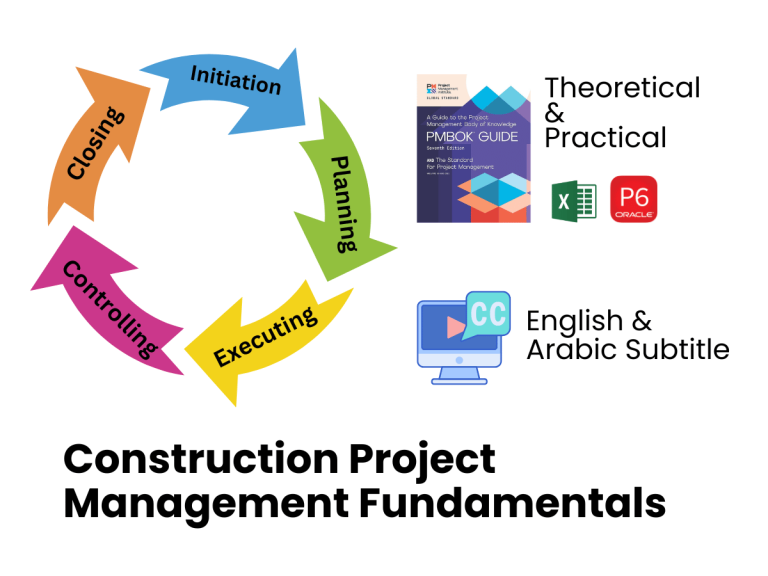
Construction Project Management Fundamentals Course
Learn how real construction projects are planned, managed, and controlled — from initiation to closing — using practical methods to deliver on…
- 7,759 students
- WhatsApp support group
- Certificate
- Advanced Excel and Power BI Skills: While engineering graduates might have a solid understanding of project management tools, non-engineers can differentiate between them by being proficient in Excel and Power BI. These tools are invaluable for creating detailed reports, dashboards, and data analyses that provide insights into project performance. Using these tools to streamline tasks, such as abbreviating tasks in Primavera using Excel, can be a significant advantage.
- Report Generation and Dashboard Creation: The ability to generate comprehensive reports and create interactive dashboards using Excel and Power BI can give non-engineers an edge. These skills are essential for presenting project data in a clear and actionable format, enabling project managers and stakeholders to make informed decisions.
Who Gets Hired? Engineer vs. Non-Engineer
When it comes to hiring for a Planning Engineer position, the decision often depends on the skills and experience of the candidates. If a project manager is faced with choosing between an engineer with the required skills and a non-engineer with the same skills, the engineer may be the preferred choice due to their formal education and the assurance that comes with it.
However, if the non-engineer possesses additional skills, such as advanced Primavera expertise, the ability to optimize tasks with Excel, and proficiency in Power BI for reporting and dashboards, they become a strong contender. These additional skills can compensate for the lack of an engineering degree, making the non-engineer an attractive candidate for the role.
Compensating for the Lack of a Degree
Ultimately, while a Bachelor of Engineering degree is a significant asset for a Planning Engineer, it is not the only path to success. By acquiring specialized skills and demonstrating expertise in key areas such as project planning, software proficiency, and data analysis, non-engineers can position themselves as valuable assets to construction companies. The key is to continuously build and refine these skills, ensuring they are at the cutting edge of industry standards.
transitioning into this specialized role requires a strong foundation in both technical knowledge and project management skills.
One of the most critical areas of study is Earned Value Management (EVM), a powerful technique for measuring project performance and progress in a quantifiable way. EVM allows a planning engineer to effectively monitor and control costs, schedules, and scope, ensuring that the project remains on track.
Additionally, understanding the fundamental basics of project management, such as risk management, time management, and resource allocation, is essential. These skills are important for planning, coordinating, and executing projects efficiently. By mastering EVM and the core principles of project management, a non-engineer can bridge the knowledge gap and excel as a planning engineer, contributing significantly to successful project delivery.
In conclusion, while it may be challenging for a construction company to recruit a Planning Engineer without an engineering degree, it is not impossible. By compensating for the lack of a formal degree with additional, highly sought-after skills, non-engineers can successfully transition into the role of a Planning Engineer and contribute significantly to the success of construction projects.
Download the Resources of this Article
Can I work as a Planner Without being an Engineer? 183.15 KB 1291 downloads

Keep in Touch
Join our Email Newsletters and receive FREE weekly useful content!

Keep growing with Planning Engineer
Learn with a clear path
From Primavera P6 basics to claims, cost control and Power BI. Start with our free courses.
Browse coursesGet help on WhatsApp
Every course comes with a private WhatsApp support group where our team answers your questions.
Join a courseFind planning jobs
109 open planning and project control jobs. Post your resume so employers can find you.
See jobsGet tips by email
Free planning tips, templates and course offers. Unsubscribe any time.
Related posts:




You may also like

How to Minimize Total Float in Construction Activities

