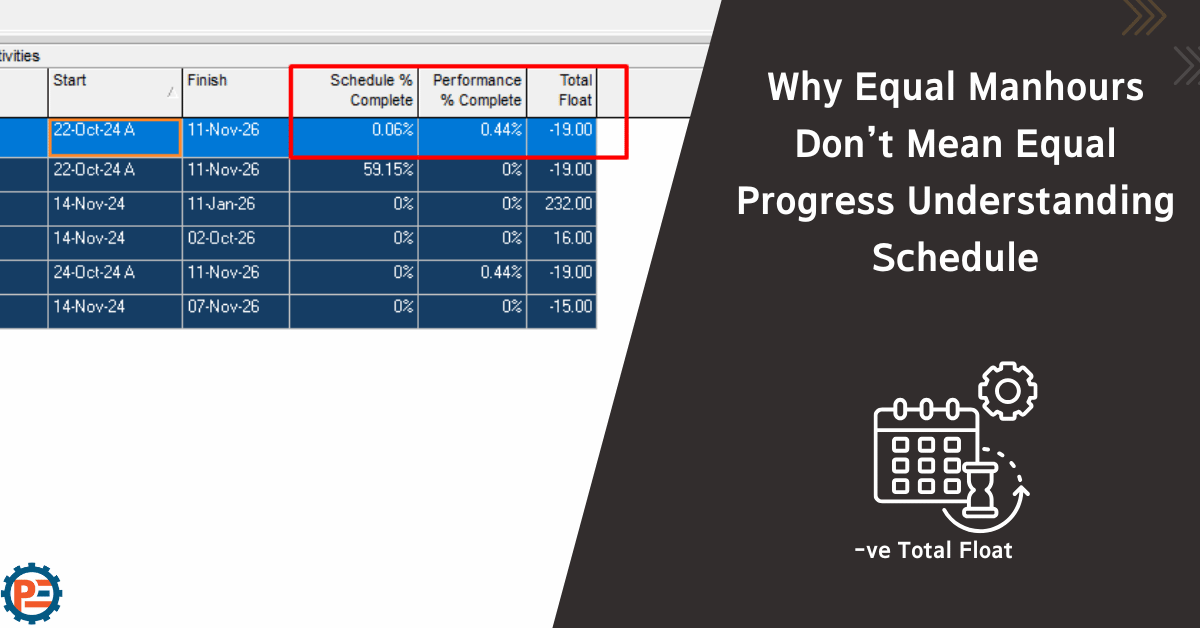
A planning engineer’s job does not end with the approval of the baseline schedule. In fact, this is where the challenge begins. As the project progresses, regular updates, follow-ups, and expected changes require careful monitoring to ensure alignment with the …
Practical articles for planners
549 articles on planning, Primavera P6, cost control, claims and reporting, written by working planning engineers.
When working on construction schedules in Primavera P6, accurately defining your calendar is just as important as defining the activities themselves. Whether you’re planning a high-rise tower or an infrastructure project, the calendar directly influences your project logic, durations, float …
In project planning, there is no absolute right or wrong approach, only strategies that best fit the project’s requirements. When managing shop drawing submittals in Primavera P6, planners often debate whether to link submittals as activities or use lag time …
Landing your first (or next) planning engineer role starts with a strong introduction. Many candidates underestimate the power of a well-structured self-introduction, but it sets the tone for the entire interview. A confident, concise, and professional opening can immediately capture …
In Primavera P6, defining logical relationships between activities is an essential step for building an accurate and realistic project schedule. The Primavera P6 provides four types of activity relationships, which are Finish-to-Start (FS), Start-to-Start (SS), Finish-to-Finish (FF), and Start-to-Finish (SF). …
The accuracy of progress reporting is critical in construction projects for monitoring performance, managing risks, and ensuring timely completion. Subcontractors or contractors may overestimate progress to receive early payments or underreport to cover delays. Verify the progress reported as a …
Grow your planning career
Learn with a clear path
From Primavera P6 basics to claims, cost control and Power BI. Start with our free courses.
Browse coursesGet help on WhatsApp
Every course comes with a private WhatsApp support group where our team answers your questions.
Join a courseFind planning jobs
129 open planning and project control jobs. Post your resume so employers can find you.
See jobsGet tips by email
Free planning tips, templates and course offers. Unsubscribe any time.
In Primavera P6, constraints ensure that project schedules align with real-world requirements. While the software primarily relies on activity relationships to determine the sequence and timing of tasks, constraints provide additional control over start and finish dates when specific deadlines …
Negative lag, or lead, is a scheduling term that allows the successor activity to start before the predecessor activity finishes. Essentially, it creates an overlap between the two activities. For example: If Activity A has a Finish to Start (FS) …
A Baseline Schedule is a project’s reference plan against which progress is measured. It defines the planned sequence of activities, expected durations, allocated resources, and dependencies between tasks. However, what happens when this schedule is found to be incorrect? …
Is it possible in Primavera P6 for a project’s Performance Percentage Complete to be higher than the Scheduled Percentage Complete yet still have negative float? A scenario that can often cause confusion among planners and project stakeholders. This disagreement arises …
Never miss a planning tip
Join our email list and follow Planning Engineer for new articles, free templates and course updates.
Free planning tips, templates and course offers. Unsubscribe any time.