In construction project planning, a well-structured Work Breakdown Structure (WBS) lays the foundation for organizing activities and tracking progress. However, the true value of a WBS isn’t just in listing activities; it lies in how those activities are sequenced and …
Welcome to the second article in the Sequencing Construction Activities series. In the first article, we discussed the masonry activity. Now, in this follow-up article, we will explore the Plastering activity. Construction sequencing is not just about linking tasks in …
In construction project planning and scheduling, clarity in timelines is essential—not only for execution but also for communication, reporting, and contractual compliance. One of the most common sources of confusion lies in the interpretation of calendar days versus working days. …
In the fast-paced and high-stakes environment of the construction industry, effective work performance management is critical to delivering projects on time, within budget, and to the required quality standards. It encompasses the systematic process of planning, monitoring, and evaluating the …
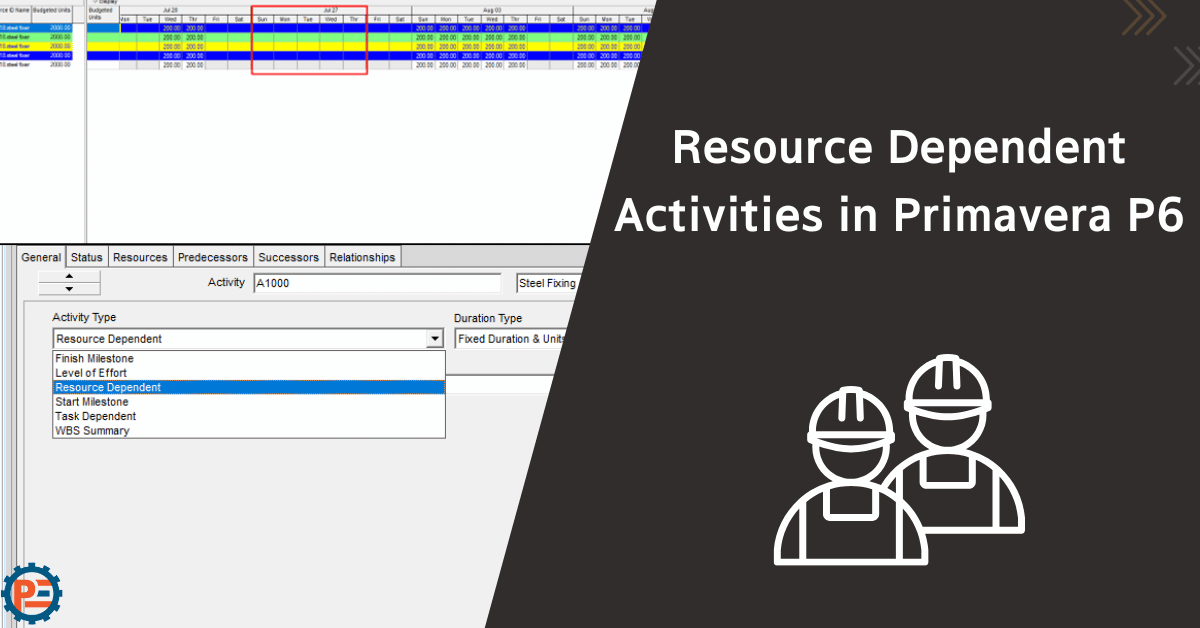
In Primavera P6, selecting the right activity type is essential in accurately modelling project logic during schedule updates. Among the various types, the Resource Dependent activity type is particularly important when the performance of an activity is directly tied to …
Before discussing progress updates and resource tracking in Primavera P6, one of the most overlooked critical steps is the Primavera P6 calculation options under the Projects window, such as the “Calculations” tab. These settings govern how the software behaves when …
Sequencing activities in Primavera P6 is one of the most critical steps in building a reliable and realistic project schedule. It defines the logical flow of work, the order in which tasks must be performed, and how delays or changes …
Delays in construction projects are common, but when multiple delays overlap—each caused by a different party—they present a more complex challenge known as concurrent delay. These scenarios often lead to disputes over time extensions and financial entitlements, especially when it …
As discussed in our previous articles, effectively managing and optimizing total float is a critical aspect of developing a reliable and realistic baseline schedule. Total float, when strategically controlled, helps ensure that key project activities remain on track and that …
A planning engineer’s job does not end with the approval of the baseline schedule. In fact, this is where the challenge begins. As the project progresses, regular updates, follow-ups, and expected changes require careful monitoring to ensure alignment with the …