How to perform Cost Control in Construction Projects
The cost control Process is an iterative series of actions. It means, that after we create the budget plan, collect the updated (actual) analyses, and report the cost control performance, then we might need to take some corrective actions and update the budget plan accordingly.
For example, if we calculated our budget cost plan based on certain productivity rates for the Raft Foundation. During the updates, we found a big deviation between budget productivity and actual Productivity on site.
upon investigation, we found that due to site special conditions, the raft foundation is taking more hours than budget. Accordingly, the Cost Control Engineer should inform the management about his/her findings.
and take a permit to change the budget cost plan. This action will give the management of the company an early alarm and estimation of this issue’s impact on the project cash flow.

Ready to take your skills to the next level? 🚀 Check out our Special Online Courses! 🚀
Gain valuable insights, boost your career, and learn from industry experts.
1- Budget cost plan components:
During the course, we will see step-by-step how to create a budget plan using smart techniques. However, at this point, I want to let you know the basics of the budget cost plan.
A- Project Budget Cost
The first step in cost control is to prepare the project budget costs. Accordingly, we have two types of costs:
- Direct costs: it is the cost of materials, taboos, Equipment, subcontractors, or any other Costs that can be loaded to a certain activity.
- Indirect costs: it is the cost of supervision salaries, site offices, money paid to issue l. C, Guarantees..etc to the client. this involves also any cost that cannot be loaded to a certain activity.
Direct Cost
1. Material Costs
2. Labors Costs
3. Equipment Costs
4. Subcontractors Cost
5. + Any costs can be Loaded to Certain Site Activity
Indirect Cost
1. Site supervision Salaries
2. Site Offices Cost
3. Project Financial Cost
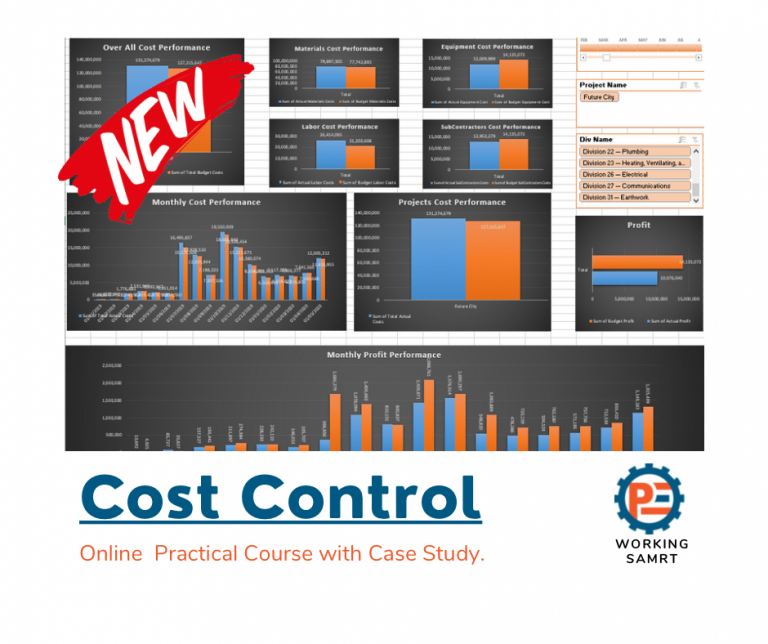
Cost Control for Construction Projects
Course WhatsApp Support Group All enrolled trainees get an invitation to the course WhatsApp support group, where our team answers your questions…
- 805 students
- WhatsApp support group
- Certificate
4. Head Office Cost
5. + Any Costs cannot be Loaded to certain site activities
Examples of direct and indirect Costs
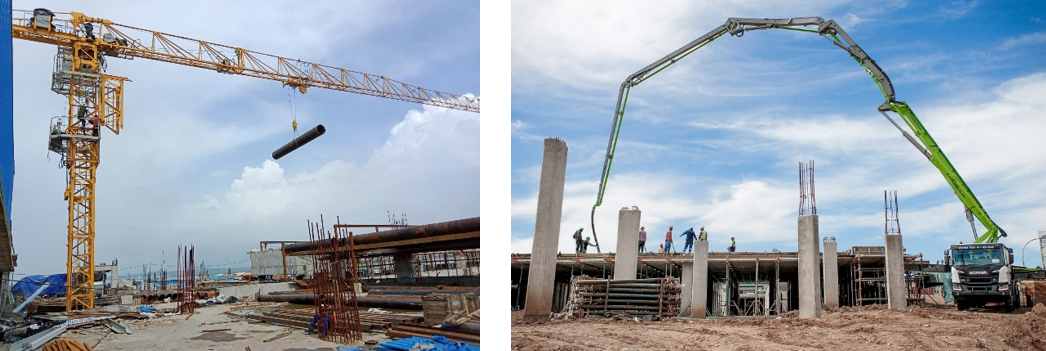
Let us say we have two pieces of equipment (Tower Crane and Concrete pump) which one should be direct or indirect?
For Sure, the Concrete pump is a direct Cost since it is part of concrete works whereas the tower crane is an indirect cost because we cannot specify which activity this equipment serves the tower crane will serve the concrete, masonry, finishes, and too many activities.
B- Project Baseline Schedule
Well, I can hear your inner voice asking why we need a project Baseline to perform cost control?, simply we need to have a Project cash Flow. I mean here, the real cash flow includes the cash in, Cash out, and net cash.
We need to tell our company about the maximum negative Cash glow we expect in this Project. And all of that cannot be done without having the project baseline
Example of cash flow:

The chart above shows the net cash flow of the project which will start with advanced payment and monthly work in progress will require spending money and accordingly, we get paid from the client.
The most useful information in this chart is that by March 2020, the company should have around 20 million to finance the project. this is the capital required which is very important to be known.
2- Collect the updates:
This is where most engineers are stuck and cannot provide fast and accurate updates. Remember, we agreed at the beginning of the course that we want to work smart, not hard.
Accordingly, in this course, I have developed a smart way to update the progress of actual costs with minimal effort.
To be honest, the challenge here is in the progress updates since Actual costs can be collected from invoices. However, it is important to know the Actual cost of each activity as well. This will help us to define problems and cost overruns later on.
3- Analysis and report:
A. Project Analysis:
This is the most exciting part where all your efforts will show its values. puts pits and pies of information together will result in an amazing summary report with limitless possibilities for other detailed reports. By implementing the cost control technique in this course, you will be able to find where the activities are that cause delays to the project and take the relevant corrective actions.
B. Project Detailed report:
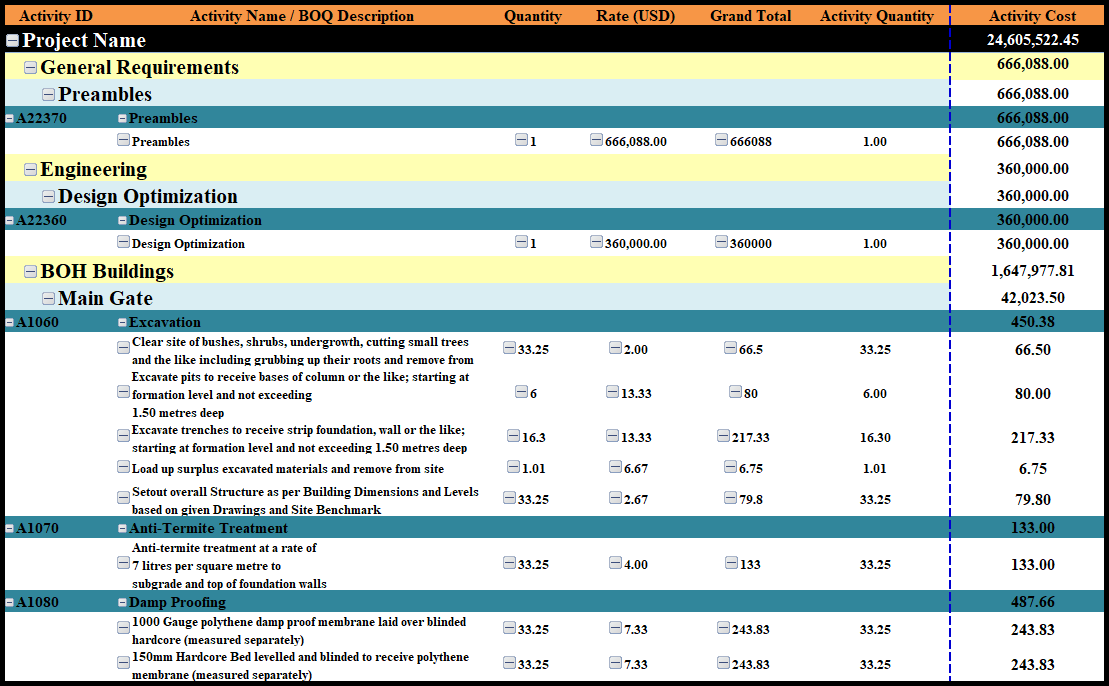
When it comes to the detailed report, we should be able to define the cost variance down to the activity name. Also, we need to know the location, Zone, etc.
4- Corrective Actions:
Now you know as per the example above that Zone 2 and Zone 3 Concrete for foundations are causing cost overruns of 5,152 and 5,438 respectively. You can go now to the concerned person and talk with him or her to see how to fix this issue. This is called corrective action. You might then need to update your budget plan as we said before cost control is an iterative process.

Download the Resources of this Article
How to perform Cost Control in Construction Projects 427.95 KB 3872 downloads

Keep in Touch
Join our Email Newsletters and receive FREE weekly useful content!

Keep growing with Planning Engineer
Learn with a clear path
From Primavera P6 basics to claims, cost control and Power BI. Start with our free courses.
Browse coursesGet help on WhatsApp
Every course comes with a private WhatsApp support group where our team answers your questions.
Join a courseFind planning jobs
25 open planning and project control jobs. Post your resume so employers can find you.
See jobsGet tips by email
Free planning tips, templates and course offers. Unsubscribe any time.
Related posts:




![What Is Included in the Weekly Report [Report Template]](https://planningengineer.net/wp-content/uploads/2025/05/What-Is-Included-in-the-Weekly-Report-Report-Template-600x400.png)